= Physical Impairments =
Artist/Title /Date
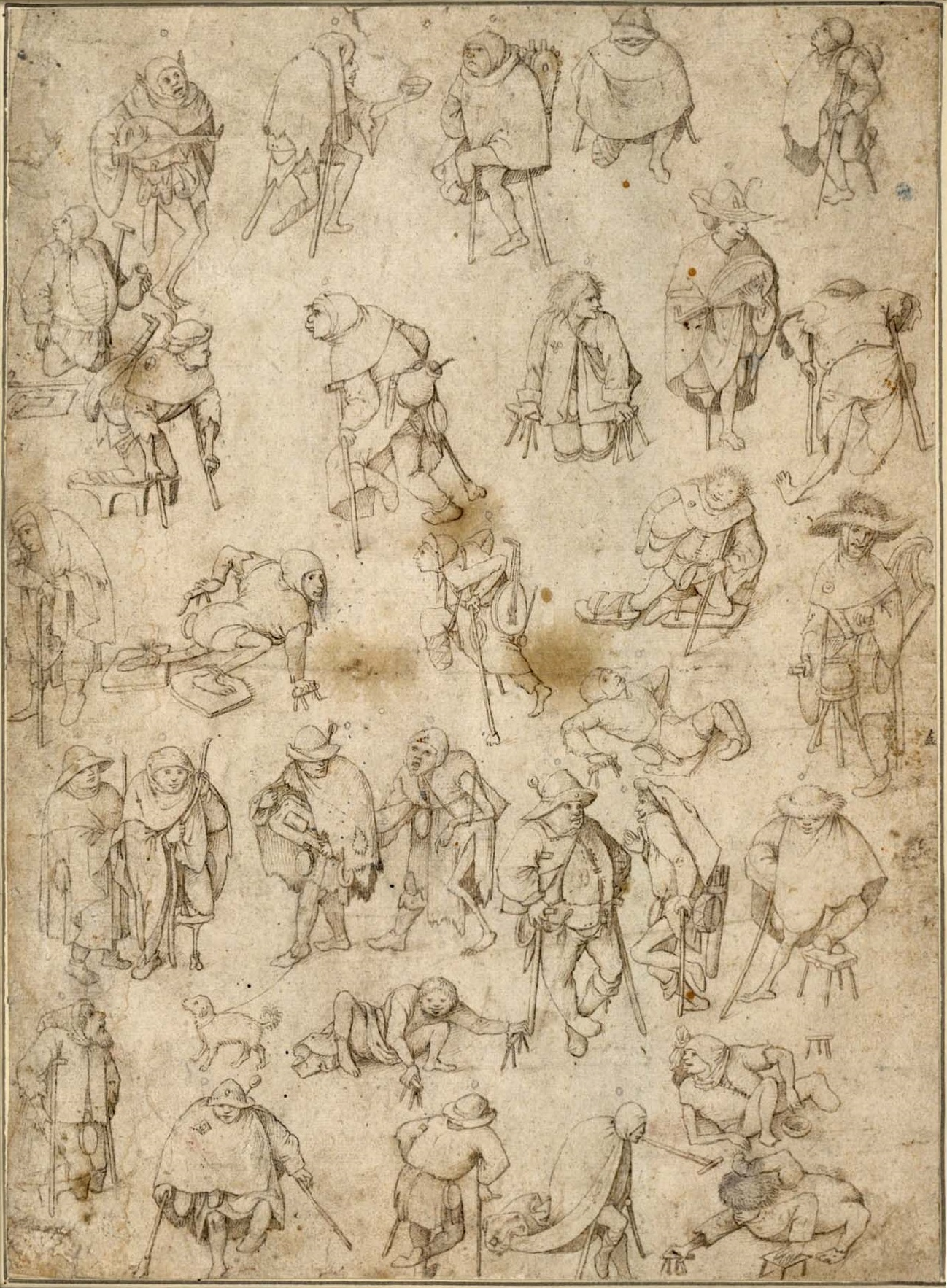
Hieronymus Bosch, “Paleopathology of the Medieval Disabled and its Relation to the Bone and Joint”, ca. 1500 CE, drawing
Description of Disease & Etiology
Many physical ailments can be identified in this artwork. For example, many skeletal deformities can be seen such as kyphosis, scoliosis, contractures, limb paralysis, talipes equinovarus, bandaged extremities and others. There can be many underlying causes of these various physical impairments. Certain infectious diseases such as poliomyelitis and leprosy can cause limb and gait abnormalities. Nutritional deficiencies such as rickets can be implicated. There are also congenital deformities that may or may not be of genetic origin. Some of these ailments could have been secondary to traumatic injuries.1
Based on the many etiologies, there was a range of possible medical conditions prevalent in the medieval and early Renaissance periods.
Pathology
Due to the wide range of etiologies, the pathological development could be quite variable. Inadequate diet and lack of sunshine could have produced pathologies related to nutritional deficiencies. Leprosy and tuberculosis, both Mycobacterium sp could have produced paralysis, limb deformities and skeletal muscle atrophy. Genetic disorders such as osteogenesis imperfecta and spinal malformations could have been the primary cause of some of the depicted malformations. Pathology associated with trauma such as war injuries, labor injuries or accidents could be the primary cause of several of the depicted impairments.2
Signs/Signifiers of Illness
The various individual clinical characteristics depicted reveal coping patterns as well as walking aids. Many are utilizing axilla crutches while some are on all fours with and without devises to aid them. The physical impairments vary as do the individual clinical signs. One significant finding is the wearing of a cape which denotes leprosy and the carrying of a food begging scale.
Although clinical signs vary, the abnormal stance and gait are predominating features for musculoskeletal disease. Oftentimes, mental depression accompanies physical impairments.3
Treatment
Medical treatment was very limited and was deeply associated with religion. Physicians operated under the humoral theory of medicine. Treatments would include herbal medicine and bloodletting. Oftentimes, the afflicted traveled to holy sites for miracle cures. There was limited access to care facilities and surgical intervention was rare or met with a fatal outcome. Most of the afflicted relied on begging for survival as they were marginalized by society.4
Social Determinants of Illness
There is a direct correlation between poverty and many of the physical impairments. Food deprivation, lack of appropriate medical care, including immediate and long-term recovery facilities. Hazardous work and warfare created some of these impairments which was linked to socioeconomic status. Those with physical impairments were socially unacceptable and lived an impoverished life with little to no help from society.3
Author (s): Donna Johnson, DVM
Citations:
1. Metzler, I. Disability in Medieval Europe. (Routledge, 2006). doi:10.4324/9780203016060.
2. Edin, J. D., Fabry, G. & Vanopdenbosch, L. Hieronymus Bosch (1450±1516): Paleopathology of the Medieval Disabled and its Relation to the Bone and Joint Decade 2000±2010.
3. Fitzgerald, M. H. Social Perceptions of People with Disabilities in History. ''Am. Anthropol.'' 101, 669–670 (1999).
4. Batten, C. Health and the Body in Early Medieval England. ''Elem. Engl. Early Mediev. World'' (2024) doi:10.1017/9781009246248.